
There’s a specific kind of pain that comes from realizing halfway through a workout that you’ve made a terrible plan.
Too heavy. Too fast. Not enough rest.
You feel great… right up until you don’t.
Advertising has the same problem.
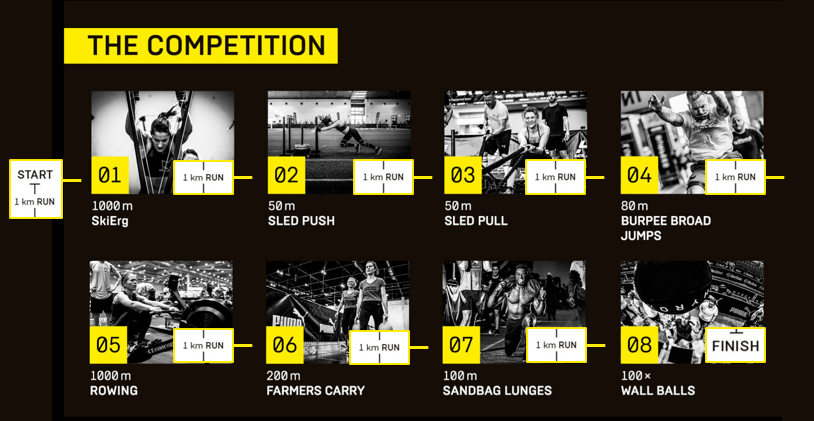
There’s a new kind of race taking over gyms around the world, and it’s catching on not because it’s extreme, but because it’s balanced.
It’s called Hyrox.
And it turns out, it’s a pretty good blueprint for how advertising should work.
A Framework Advertising Already Knows (and Ignores Anyway)
The tension between long-term brand building and short-term performance advertising isn’t new.
It’s been studied, proven, and repeated.
Binet and Field famously recommended a 60/40 split:
- 60% long-term brand investment
- 40% short-term activation
At this point, it’s the most cited and least followed research in marketing.
The equivalent of owning a foam roller and confidently stepping over it every day.
We know balance matters. We just don’t like doing the parts that take longer to pay off.
The Industry Is Skipping Cardio
Here’s the problem.
 When you over-index on performance, things work… until they don’t.
It feels productive. It looks measurable. It gives you something to report on Monday morning.
It works. Until it doesn’t.
Because over time, something subtle starts to happen.
You keep generating transactions… while losing relevance.
You keep optimizing… while getting more expensive.
You win the workout… and lose the race.
Les Binet and Peter Field showed that over-reliance on short-term activation weakens long-term growth. You can harvest demand, but you’re not creating it.
In Hyrox terms: Strong enough to move things. Too gassed to go anywhere.
What a “Hyrox” Advertising Approach Looks Like
Hyrox works because it alternates. It builds multiple capabilities at once.
Advertising should do the same.
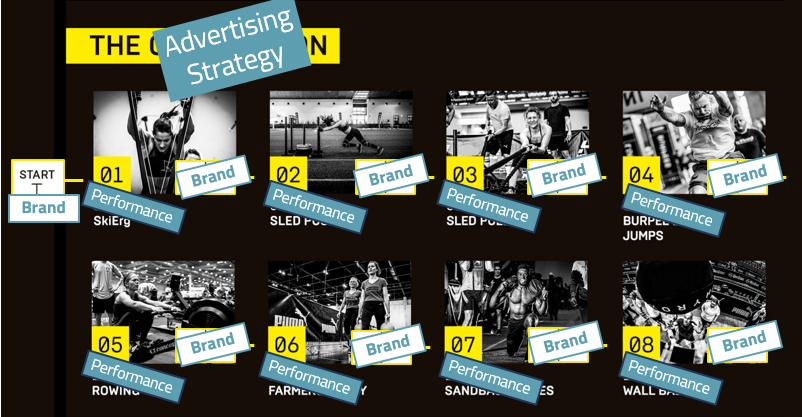
Running = Brand building
- This is your base. Awareness. Emotional connection. Memory.
- It’s slow. It doesn’t spike performance dashboards. But it makes everything else more efficient.
- Byron Sharp’s research on mental availability backs this up: brands grow by being easy to think of, not just easy to click. They have to remember you.
- Skip this, and everything downstream gets more expensive.
Strength stations = Performance, Activation
- Promotions. Retargeting. Launches.
- These are intense, measurable, and necessary. But without a base? They burn out fast.
- Performance marketing works best when it’s amplifying demand, not trying to create it from scratch.
The Real Discipline Isn’t Effort. It’s Balance.
Performance always feels more urgent than brand building.
There’s a number attached. A target. A deadline.
Brand work feels… quieter. Longer-term. Harder to defend in a weekly meeting. So, it gets deprioritized.
But the brands that grow don’t treat brand as optional. They treat it as infrastructure.
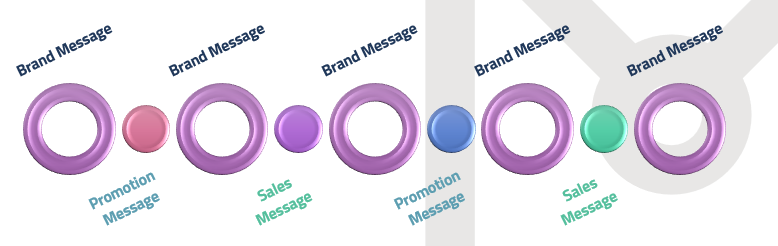
With a system that includes both brand and performance, you:
- Protect brand investment, even when performance is working
- Use activation to amplify, not compensate
- Plan across time, not just campaigns
- Measure progress in layers, not snapshots
Because influence doesn’t happen all at once. It accumulates.
Hyrox doesn’t let you skip the run because you’re tired. The format forces the discipline. That’s the lesson.
Run the Race

You don’t win Hyrox by being exceptional at one station.
You win by being good enough at all of them—consistently.
No shortcuts.
No skipping.
No pretending one part doesn’t matter.
Advertising works the same way. You can chase performance forever. But without the base, it gets harder every time.
So yes, run your campaigns. Optimize your conversions. Track your ROAS.
Just don’t forget to run.
Because the brands that win aren’t the ones who go hardest for the shortest time. They’re the ones who build the capacity to keep going.