
A famous green, grumpy ogre once compared themselves to an onion. Because they were made up of layers, and therefore complex.
When people ask, “we ran the ads, why didn’t it work?”, you need to remember the layers.
You don’t go to the gym once and expect abs.
You don’t take one antibiotic and expect immunity.
You don’t see one ad and suddenly change your buying behavior.
That reinforcement, those layers, are what move the needle on human behavior.
And since marketing and media planning are about human behaviour, an ad impression is not one and done. Media influences human behaviour incrementally, cumulatively, and slowly. Layer by layer. That’s by design.
But layers take time to build and grow.
Frequency Isn’t Just “More”. It’s Smarter.
Marketers often worry about frequency. Platforms have settings for frequency caps, and marketers wonder, ‘won’t people get annoyed?’
Did we repeat the ‘onion’ too many times?!
First of all, marketers should acknowledge that we’re hyper aware of ads. We’re primed to notice them, since that’s our industry. We have a bias that sees ads everywhere.
Secondly, there is no one-size-fits-all approach to the perfect ad frequency.
The Trade Desk conducted research and found that for Awareness and Recommendation, increased frequency increased lift across the purchase journey.
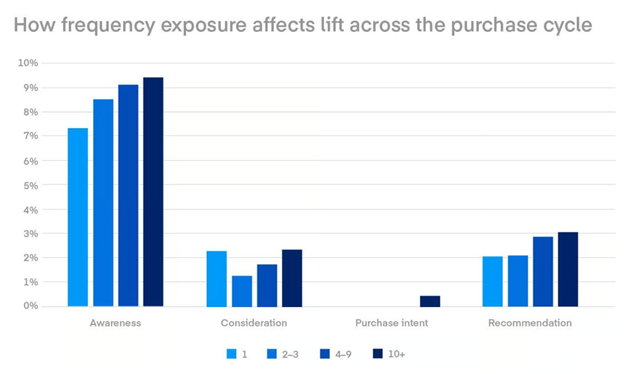
The perfect ad frequency depends on your goal, your chosen placements, and how they all work together.
What if instead of thinking of frequency as needless repetition, we reframe it as reinforcement?
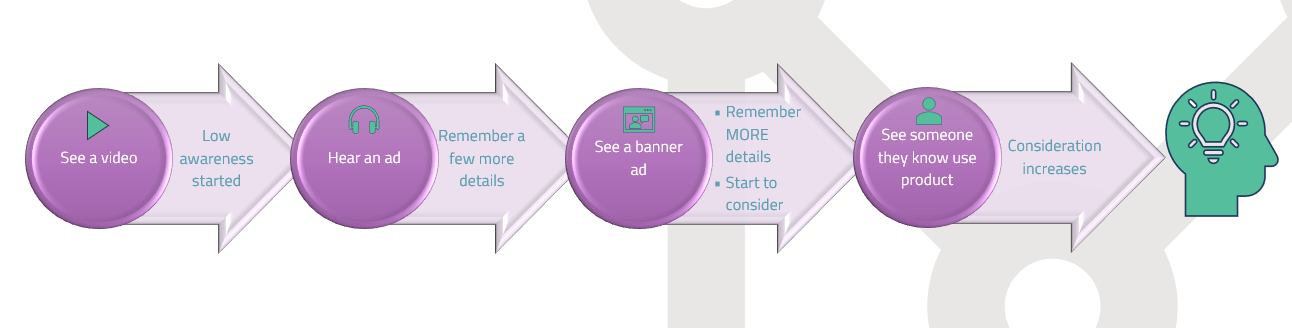
Reinforcement can support message evolution. With small message tweaks to the relevant context, while maintaining a memorable theme, it can allow mental availability to grow.
Contextual reinforcement works like this:
Where Frequency Becomes Too Much
Now, focusing on frequency can backfire. It’s a very fine line between being memorable in a helpful way, and being memorable in the wrong way.
An Epsilon study found that 88% of consumers noticed repetition in the ads they saw. That’s a lot of people.
The top two placements where too much frequency was most noticed:
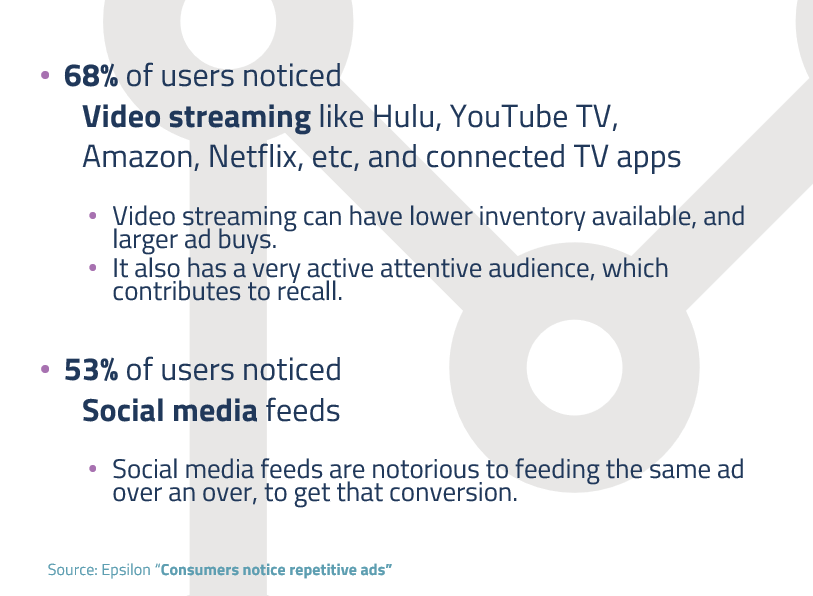
This would be like biting into a raw onion, as you would bite into an apple. Too much onion!
Being mindful of the frequency caps you set for those media placements is key to a successful campaign.
It’s Not Ad Fatigue. It’s Audience Fatigue.
When the green, grumpy ogre compared themselves to an onion, their donkey sidekick was quick to point out that parfaits also have layers, but have the benefit of being delicious.
What makes a parfait a better example than an onion?
Onions have the same layer repeated, while parfaits have different flavours and textures.
We can think about ads the same way. We often talk about changing creative due to ‘ad fatigue’. But there is a different way to understand that pain point. It’s audience fatigue.
Let’s say you buy clothing labels for your toddler. You do this to make sure their stuff comes back home. You might run out and need more labels maybe twice a year? So why does the clothing label company send you emails 3 times a week, every week? Those frequent emails fatigue your audience.
Some ideas for considering audience fatigue include:
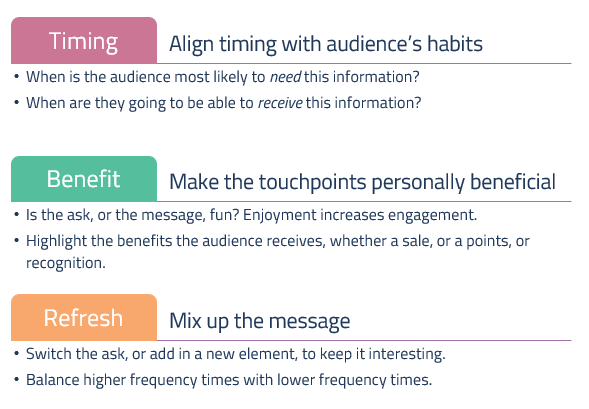
Like a parfait, by changing up the textures, and flavours, and order, you can keep this dish fresh without too much effort.
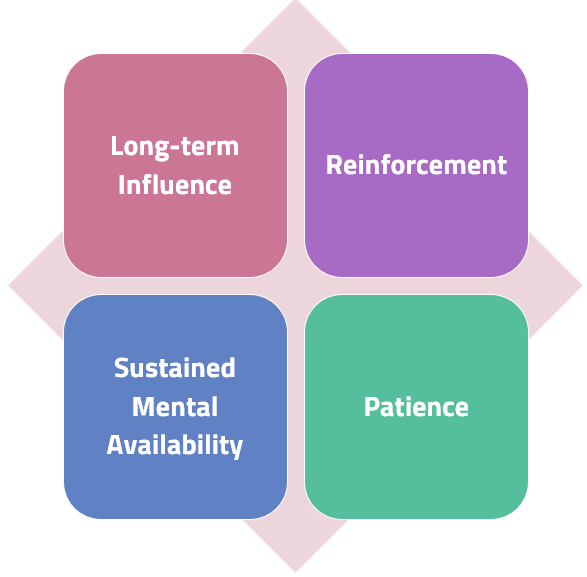 What This Means for Media Planning Today
Here’s how cumulative effects, or layers, translate into real planning decisions.
- Short bursts are not equal to long-term influence. An always-on approach will beat a stop start.
- Reframe success from being about immediate response, to being about sustained mental availability
- Plan with patience. Cumulative effects take time to build.
Frequency Works When It’s Intentional
When layered thoughtfully, repetition builds familiarity, and familiarity builds trust.
The goal isn’t to hammer people with the same onion layer until their eyes water. It’s to build a better parfait.
Thoughtful layers. Different textures. Familiar signals that show up just often enough to stick.
At Mediology, we believe media strategy works best when it respects the audience and plays the long game.
With a little curiosity, a lot of discipline, and a healthy respect for how humans actually behave, repetition stops being annoying—and starts becoming influence.